Sahara Desert Tour from Marrakech: Merzouga vs Zagora – Complete Comparison Guide
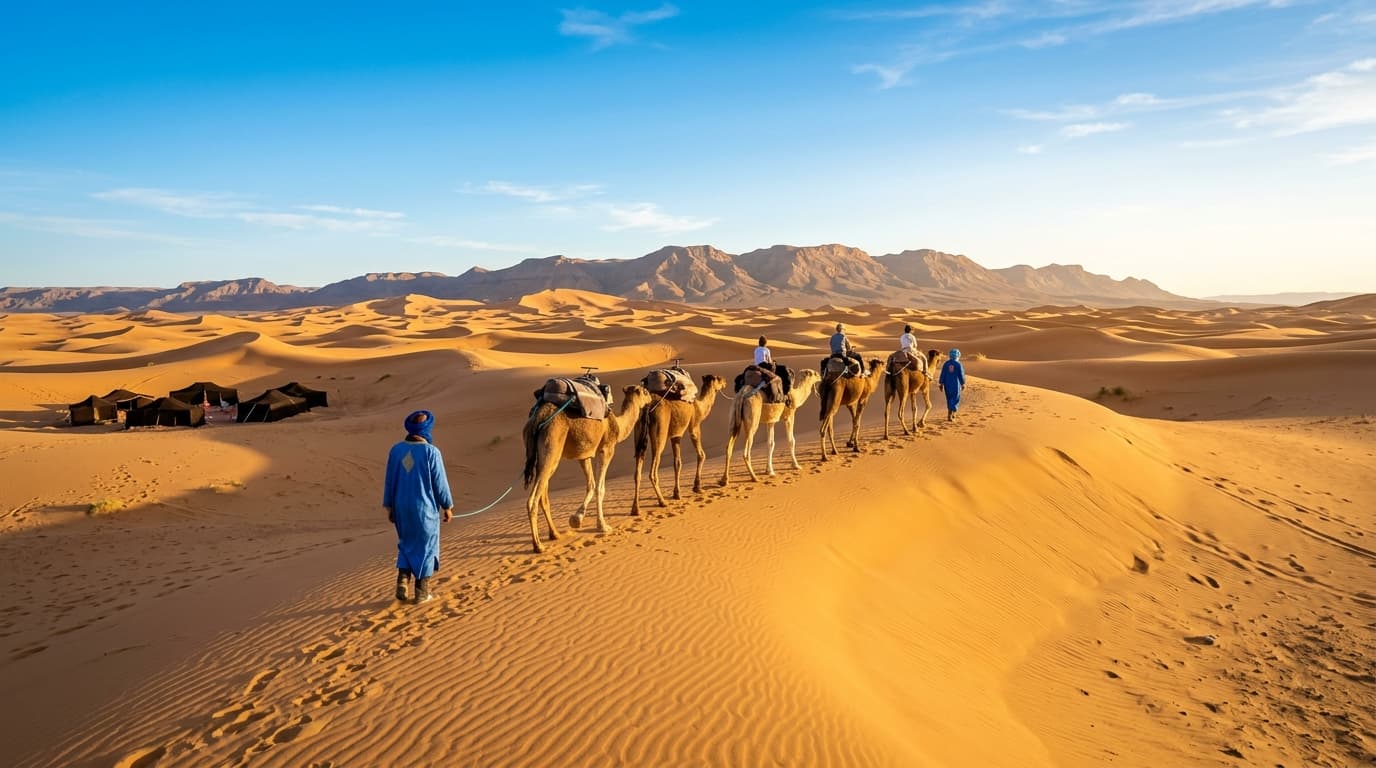
The Sahara calls to you—endless golden dunes, camel treks under star-filled skies, and nights in traditional Berber camps. But standing in your Marrakech riad, you face a choice: Sahara desert tours from Marrakech lead to two very different experiences. Merzouga, in the eastern Sahara, offers dramatic dune landscapes and the famous Erg Chebbi. Zagora, to the southwest, delivers a more intimate desert feel with fewer tourists and equally stunning sunsets. We've done both—multiple times—and we're here to cut through the marketing noise and tell you which is right for you.
Key Takeaways
| Question | Answer |
|---|---|
| What is the best time to visit? | October to April; avoid July–August when temperatures exceed 45°C (113°F) |
| How much does it cost? | Merzouga: 1,200–2,500 MAD ($115–$240 USD) per person; Zagora: 900–2,000 MAD ($85–$190 USD) per person |
| How far from Marrakech? | Merzouga: 465 km (9–10 hours); Zagora: 320 km (6–7 hours) |
| Is it safe? | Yes, both routes are safe; travel with established operators and avoid solo night driving |
| What should I book in advance? | Tours 3–5 days ahead; accommodation 1 week ahead during peak season (Oct–Nov, Mar–Apr) |
| Which has better dunes? | Merzouga (Erg Chebbi); Zagora offers more solitude and authentic Berber culture |
| Can I do a day trip? | Technically yes, but 2–3 days is recommended for either destination |
1. Understanding the Two Desert Routes
The Sahara from Marrakech isn't one experience—it's a fork in the road. Merzouga lies in the far northeast, near the Algerian border, while Zagora sits southwest, closer to the Mali frontier. Both are genuine Sahara experiences, but the journey, landscape, and vibe differ significantly.
When we first visited Merzouga five years ago, we were struck by the sheer scale of Erg Chebbi—towering dunes that rise 150 meters and shift with the wind. Zagora felt different: quieter, less crowded, with a frontier-town charm that reminded us why we fell in love with Morocco in the first place. The choice between them depends on what you're after: Instagram-worthy drama or authentic solitude.
Merzouga: The Famous Eastern Route
Merzouga is the Sahara desert tour most guidebooks recommend. It's the gateway to Erg Chebbi, Morocco's most photographed dune field, and it sits at the edge of a vast sand sea that stretches toward Algeria. The town itself is small—a cluster of hotels, riads, and tour operators—but it's the launching point for proper desert immersion.
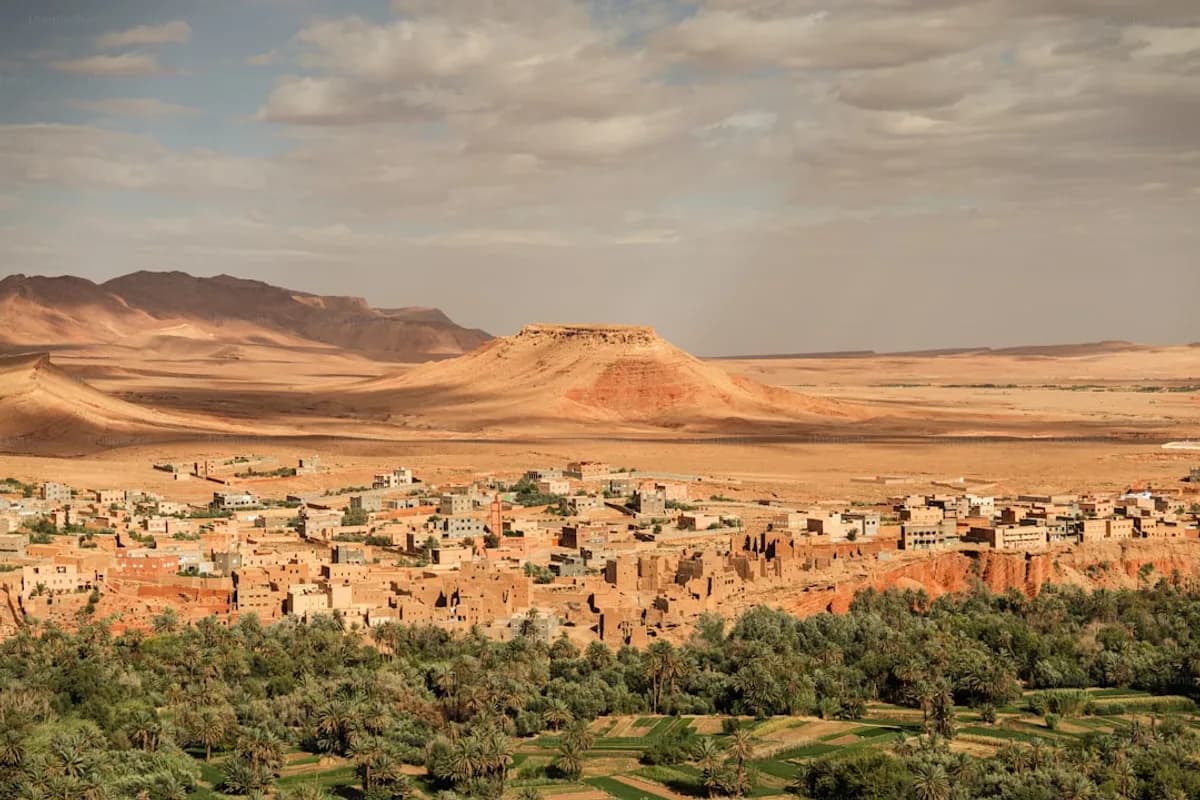
The drive from Marrakech to Merzouga takes 9–10 hours and winds through the Atlas Mountains, the Ziz Valley, and the Tafilalt region. You'll pass Berber villages, date palm groves, and the stunning Todra Gorge if your tour includes the scenic route. Most tours are 3 days/2 nights, with a night in a desert camp (either a traditional Berber tent or a more upscale glamping setup) and time for camel trekking, sunrise/sunset viewing, and stargazing.
Zagora: The Quieter Alternative
Zagora is the road less traveled—literally. The famous sign reads "Timbuktu 52 Days by Camel," and that frontier spirit persists. It's closer to Marrakech (6–7 hours), cheaper, and far less crowded than Merzouga. The dunes near Zagora (Erg Murzuq and Erg Ubari) are smaller and sandier than Erg Chebbi, but they're no less beautiful, especially at dawn when the light turns the sand amber and gold.
During our last visit to Zagora, we stayed in a family-run desert camp run by a Sahrawi guide named Moha. There were maybe five other tourists in the entire camp—a stark contrast to Merzouga, where we'd seen dozens of identical tour groups. Zagora suits travelers who want to feel like explorers rather than tourists, and who value cultural connection over dramatic landscapes.
2. Distance, Duration, and Travel Time
Let's be practical: distance matters when you're planning a desert trip. Merzouga desert tours require serious time commitment, while Zagora is more accessible for travelers on tighter schedules.
Merzouga is 465 kilometers from Marrakech—roughly a 9–10 hour drive depending on road conditions and stops. Most tours are 3 days/2 nights, meaning you'll spend 2 days driving and 1 full day in the desert. Some operators offer 4-day versions that include the Todra Gorge or Dades Valley, which we'd recommend if you can spare the time. The drive itself is spectacular: you'll cross the Atlas Mountains via the Tizi n'Tichka pass (2,260 meters), descend into the Draa Valley, and wind through Berber villages that feel frozen in time.
Zagora is 320 kilometers from Marrakech—a 6–7 hour drive through the Anti-Atlas Mountains and the Draa Valley. Most tours are 2 days/1 night, which means less time on the road and more time in the desert or exploring the town. Some operators offer 3-day versions that include the Draa Valley or a visit to a Berber village. The shorter drive makes Zagora ideal if you're short on time or prefer not to spend an entire day in a vehicle.
Driving Conditions and Road Quality
The roads to both destinations are paved and well-maintained, but they're not highways. Expect winding mountain passes, occasional potholes, and slow-moving trucks. During our time in Marrakech, we learned that the Tizi n'Tichka pass (on the Merzouga route) can be treacherous in winter—snow occasionally closes it—so check conditions if you're traveling November–February.
The Draa Valley road (shared by both routes) is scenic but slow. Don't expect to average more than 60 km/h once you leave the main highway. This isn't a downside—the slower pace lets you see the landscape and stop for photos—but it's important to know when planning your itinerary.
3. Comparing the Dunes and Landscapes
Here's where the two routes diverge most dramatically. If you're chasing the iconic Sahara—towering dunes, endless horizons, that "lost in the desert" feeling—Merzouga delivers. If you want authentic desert culture with a gentler landscape, Zagora wins.
Erg Chebbi: Merzouga's Showstopper
Erg Chebbi is Morocco's largest sand dune field, with dunes reaching 150 meters high. The name means "big dune" in Tamazight, and it lives up to it. When you stand at the base of these dunes at sunrise, watching the light paint them gold and crimson, you understand why every travel magazine features Merzouga. The dunes are steep enough for sandboarding (yes, it's a thing), and the camel trek across them feels genuinely adventurous.
The downside? Erg Chebbi is popular. During peak season (October–November, March–April), you'll share the dunes with dozens of other tour groups. We've seen camel trains lined up like traffic jams at sunrise. If solitude matters to you, go in shoulder season (September, May) or accept the crowds as part of the experience.
Zagora's Intimate Desert
The dunes near Zagora are smaller—typically 30–50 meters—but they're sandier and more intimate. Erg Murzuq and Erg Ubari feel less like tourist attractions and more like actual desert. You'll see fewer camel trains, fewer tourists, and more Sahrawi herders going about their daily lives. The landscape is flatter, which some find less dramatic but others find more peaceful.
During our Zagora visit, we spent an afternoon with a local guide who showed us how Sahrawi families navigate the desert, where to find water, and how to read the stars for navigation. This kind of cultural immersion is harder to find in Merzouga, where tourism infrastructure has scaled up significantly.
4. Desert Camp Experiences and Accommodation
Your nights in the desert define the entire experience. Both routes offer camps, but the quality and style vary wildly depending on your budget and preferences.
Merzouga Camp Options
Merzouga has camps ranging from basic Berber tents (shared facilities, minimal amenities) to luxury glamping with en-suite bathrooms and solar power. Budget camps run 300–600 MAD ($28–$57 USD) per person per night; mid-range camps (which we'd recommend) cost 600–1,200 MAD ($57–$115 USD); luxury camps exceed 1,200 MAD ($115+ USD).
Most mid-range camps include a Berber tent with mattresses and blankets, a shared hammam (hot shower), dinner, breakfast, and a guide for camel trekking. The food is typically tagine, couscous, or grilled meat—simple but delicious. The communal atmosphere means you'll meet other travelers, which is great if you're solo but less ideal if you want privacy.
We stayed at a mid-range camp called Erg Chebbi Luxury Camp (not the most original name, but the experience was solid). The tent was warm, the food was good, and the guide was knowledgeable. The only complaint: the camp was full—maybe 40 tourists—so it felt more like a hotel than an intimate desert experience.
Zagora Camp Options
Zagora camps are generally smaller and more personal. Budget camps cost 250–500 MAD ($24–$48 USD) per night; mid-range camps run 500–1,000 MAD ($48–$95 USD). Luxury options are rarer in Zagora, which is part of its charm—tourism hasn't overwhelmed the region.
The camps we've visited in Zagora tend to be family-run, with 10–20 guests maximum. Dinner is often cooked fresh (we've watched the cook prepare tagine over a fire), and guides are usually locals with deep knowledge of the region. The trade-off: fewer amenities, less predictable service, but more authenticity.
| Camp Type | Best For | Merzouga Cost | Zagora Cost | Notes |
|---|---|---|---|---|
| Budget Berber Tent | Backpackers, budget travelers | 300–600 MAD | 250–500 MAD | Shared facilities, basic bedding |
| Mid-Range Camp | Most travelers | 600–1,200 MAD | 500–1,000 MAD | Private/semi-private tent, hammam, meals included |
| Luxury Glamping | Comfort-seekers | 1,200–2,500 MAD | Rare | En-suite bathroom, solar power, premium meals |
Did You Know? Traditional Berber tents (called "khayma") are designed to keep you cool during the day and warm at night. The dark fabric absorbs heat during the day, then radiates it back at night—a low-tech solution that's worked for centuries.
Source: Visit Morocco Official
5. Camel Trekking and Desert Activities
You didn't come to the Sahara to sit in a tent. Both routes offer camel trekking, but the experience differs based on landscape and crowd size.
Merzouga Camel Treks
Merzouga camel treks are typically 2–4 hours, covering the dramatic Erg Chebbi dunes. You'll ride a dromedary (one-hump camel), which is surprisingly comfortable once you get used to the swaying motion. Most treks depart at sunset or pre-dawn to avoid the midday heat. The sunset trek is more popular (and more crowded), while the sunrise trek offers better light for photography and fewer tourists.
When we did the sunrise trek in Merzouga, we were in a group of eight, riding single-file across the dunes as the sun painted the sky. It was beautiful, but we could see three other camel trains in the distance. The experience felt less like exploring and more like following a well-worn path.
Zagora Camel Treks
Zagora treks are typically shorter (1–2 hours) because the dunes are smaller, but they're often more flexible. Guides can adjust the route based on your fitness level and interests. You might trek to a Sahrawi settlement, visit a well, or simply wander the dunes without a fixed itinerary.
Our Zagora trek with Moha was unstructured in the best way. We rode for an hour, then stopped to sit with a Sahrawi family who were herding goats. They offered us tea, we shared snacks, and we talked about life in the desert. This kind of spontaneous cultural exchange is harder to find in Merzouga's more organized tour infrastructure.
Other Desert Activities
Both routes offer:
- Stargazing: The Sahara has minimal light pollution. Lie on your back after dinner and see the Milky Way in stunning detail.
- Sandboarding: Merzouga's steep dunes are better for this; Zagora's gentler slopes are less ideal.
- Photography: Sunrise and sunset are magical at both locations. Bring a good camera and extra batteries (the cold drains them faster).
- Berber cooking: Some camps offer tagine-cooking classes or bread-baking demonstrations.
- Village visits: Both routes include stops in Berber or Sahrawi settlements.
6. Costs, Pricing, and What's Included
Let's talk money. Sahara desert tour prices from Marrakech vary wildly depending on group size, accommodation quality, and operator reputation.
Merzouga Tour Pricing
A standard 3-day/2-night Merzouga tour costs 1,200–2,500 MAD ($115–$240 USD) per person. Budget tours (basic camps, larger groups) start around 1,200 MAD; mid-range tours (decent camps, 4–8 people per group) run 1,500–2,000 MAD; luxury tours (upscale camps, smaller groups) exceed 2,000 MAD.
Most tours include:
- Hotel pickup and drop-off in Marrakech
- All meals (breakfast, lunch, dinner)
- Desert camp accommodation
- Camel trekking (sunset and/or sunrise)
- Guide services
- Vehicle and driver
What's often not included:
- Tips (guides expect 50–100 MAD per day)
- Alcoholic drinks
- Activities beyond camel trekking (sandboarding, cooking classes)
- Travel insurance
Zagora Tour Pricing
Zagora tours are generally cheaper: 900–2,000 MAD ($85–$190 USD) for 2 days/1 night. Budget tours start around 900 MAD; mid-range tours run 1,200–1,500 MAD; luxury options (rare) reach 1,800–2,000 MAD.
The lower price reflects shorter duration and less developed tourism infrastructure. You get similar inclusions as Merzouga tours, but fewer optional activities.
Hidden Costs and Tips
Both routes have hidden costs worth knowing:
- Camel riding discomfort fee: Your backside will hurt. There's no charge, but budget for ibuprofen.
- Tips: Guides, drivers, and camp staff expect tips. Budget 50–100 MAD per day.
- Drinks: Water and tea are usually included, but sodas and alcohol cost extra (50–100 MAD per drink).
- Photography permits: Some camps charge 50 MAD to photograph locals or villages.
- Sandboarding rental: 100–200 MAD if your tour doesn't include it.
During our Merzouga visit, we budgeted 1,600 MAD for the tour itself, then spent an extra 400 MAD on tips, drinks, and a sandboarding session. Factor in these extras when planning your budget.
7. Choosing Your Operator: Red Flags and Recommendations
Not all tour operators are created equal. We've seen everything from genuinely excellent small companies to sketchy outfits that cut corners on safety and guide quality.
Red Flags to Avoid
- Prices that seem too good to be true: If a tour costs 800 MAD when competitors charge 1,500 MAD, something's wrong. You're either getting a tiny group, a terrible camp, or a rushed itinerary.
- No clear itinerary: Reputable operators send detailed day-by-day breakdowns. Vague descriptions ("desert experience") are a warning sign.
- Pressure to book immediately: Good operators are confident in their product. If someone's pushing you to decide in five minutes, walk away.
- No reviews or only fake reviews: Check TripAdvisor, Google, and independent travel blogs. Genuine reviews mention specific guides, camps, and experiences.
- Drivers who don't speak English: Communication matters, especially in emergencies. Your driver should speak at least basic English.
Reputable Operators
We've had good experiences with mid-sized operators (8–15 employees) rather than massive tour companies or solo operators. Mid-sized companies have enough infrastructure to handle problems but enough personal touch to care about quality.
When booking, ask:
- What's the maximum group size? (Smaller is better; 4–8 is ideal)
- Who's the guide? (Ask for their background and experience)
- What camp specifically? (Not just "desert camp"—get the name)
- What happens if I'm unhappy? (Good operators offer refunds or changes)
- Are meals vegetarian-friendly? (Important if you have dietary restrictions)
Our team has booked through hotel concierges in Marrakech (usually reliable), online platforms (mixed quality), and local recommendations (often excellent). The best tours we've done came from personal referrals or recommendations from other travelers we met in Marrakech.
8. Best Time to Visit: Seasons and Weather
The Sahara is brutally hot in summer and surprisingly cold at night in winter. Timing matters.
Peak Season: October–November and March–April
October–November and March–April are ideal. Daytime temperatures are 25–30°C (77–86°F), nights are cool but not freezing, and the light is perfect for photography. These months are also peak tourist season, so expect crowds and higher prices.
We visited Merzouga in October and Zagora in April. Both were excellent, though we saw significantly more tourists in Merzouga. If you're flexible, April is slightly better than October—wildflowers bloom in the Draa Valley, and temperatures are still comfortable.
Shoulder Seasons: September and May
September and May are underrated. Temperatures are warmer (30–35°C / 86–95°F) but manageable, crowds are lighter, and prices drop 10–20%. The main risk: occasional sandstorms in May, though this is rare.
Winter: December–February
December–February nights are cold (5–10°C / 41–50°F), but days are pleasant (20–25°C / 68–77°F). The Tizi n'Tichka pass can close due to snow, making the Merzouga route risky. Zagora is more reliable. Fewer tourists, lower prices, and stunning clear skies for stargazing.
Summer: June–August
Avoid June–August. Temperatures exceed 40°C (104°F) during the day and can reach 45°C (113°F). Heat exhaustion is a real risk, and the discomfort overshadows any savings on price.
Did You Know? The Sahara isn't always sandy. Only about 25% of the Sahara is covered in dunes (called "erg"). The rest is rocky desert (hamada) and gravel plains (reg). Erg Chebbi and the dunes near Zagora are exceptions—most of the Sahara looks very different.
Source: Lonely Planet Morocco
9. Cultural Considerations and Responsible Tourism
The Sahara is home to Sahrawi and Berber communities. Respectful tourism matters.
Photography Ethics
Always ask before photographing people, especially children. Some locals are happy to pose; others find it intrusive. If someone says no, respect it. Never photograph women without explicit permission. Offer to share photos via email or social media if you exchange contact info.
During our Zagora visit, we asked a Sahrawi woman if we could photograph her while she was making bread. She agreed, and we later sent her the photos via WhatsApp. She was thrilled. This small gesture built genuine connection rather than extracting a moment.
Supporting Local Communities
- Tip guides generously: They're often the lowest-paid workers in the tourism chain.
- Buy from local vendors: Souvenirs, crafts, and goods from small shops support families directly.
- Eat local food: Tagine, couscous, and bread from family-run camps taste better and support local cooks.
- Learn basic Darija phrases: "Salam alaikum" (hello), "Shukran" (thank you), and "Labas?" (how are you?) go a long way.
Environmental Responsibility
The Sahara is fragile. Leave no trace:
- Don't litter (pack out everything you pack in).
- Don't remove rocks, plants, or artifacts.
- Use reef-safe sunscreen (some chemicals damage ecosystems).
- Conserve water (it's precious in the desert).
10. Practical Booking Guide and Final Recommendations
Ready to book? Here's our step-by-step approach.
Step 1: Decide Between Merzouga and Zagora
Ask yourself:
- How much time do I have? Merzouga needs 3 days; Zagora works in 2.
- Do I want dramatic dunes or authentic culture? Merzouga = dunes; Zagora = culture.
- Am I okay with crowds? Merzouga is busier; Zagora is quieter.
- What's my budget? Merzouga is slightly pricier; Zagora is cheaper.
Our recommendation: If you have 3+ days, do Merzouga. Erg Chebbi is genuinely spectacular, and the extra time justifies the longer drive. If you have 2 days or prefer solitude, do Zagora. You'll have a more intimate experience and spend less money.
Step 2: Choose Your Operator
- Check TripAdvisor and Google reviews (look for recent, detailed reviews).
- Ask your hotel concierge for recommendations (they know which operators are reliable).
- Email 2–3 operators with specific questions (see section 7).
- Compare itineraries, not just prices.
- Book 3–5 days in advance during shoulder season; 1–2 weeks in advance during peak season.
Step 3: Prepare for the Journey
Before you go:
- Book travel insurance that covers desert activities.
- Pack sunscreen, sunglasses, and a hat (sun exposure is intense).
- Bring layers (days are hot, nights are cold).
- Download offline maps in case you lose signal.
- Inform someone of your itinerary (basic safety).
- Check weather forecasts for your travel dates.
This article may contain affiliate links — we earn a small commission at no extra cost to you.
Step 4: Confirm Details 48 Hours Before
Contact your operator 2 days before departure to confirm:
- Pickup time and location
- What to bring
- Any last-minute changes
- Emergency contact numbers
Step 5: Enjoy the Experience
Once you're in the desert, let go of expectations. The best moments are often unplanned—a conversation with a guide, a sunset that takes your breath away, a night sky so full of stars you feel small. Both Merzouga and Zagora deliver these moments. The choice between them is less about which is "better" and more about which matches your travel style.
Frequently Asked Questions
Can I do a day trip to the Sahara from Marrakech?
Technically yes, but it's not recommended. A day trip to either destination means 6–10 hours of driving for 2–3 hours in the desert. You'll spend more time in the car than experiencing the Sahara. A minimum 2-day trip (Zagora) or 3-day trip (Merzouga) is worth the time investment.
What should I pack for a desert tour?
Bring sunscreen (SPF 50+), sunglasses, a wide-brimmed hat, lightweight long sleeves and pants (for sun protection), a warm jacket or sweater (nights are cold), comfortable walking shoes, a camera, and any medications you need. Leave behind heavy luggage—you'll only need a small day pack.
Is it safe to travel to the Sahara?
Yes. Both Merzouga and Zagora are safe for tourists. The regions are stable, tour operators are experienced, and thousands of travelers visit annually without incident. Standard travel precautions apply: avoid solo night driving, stay with your group, and keep valuables secure.
How do I get from Marrakech to the Sahara?
Most travelers book organized tours that include transportation. If you prefer independent travel, you can rent a car (requires an international driving permit) or take a grand taxi (shared minibus) from Marrakech to Merzouga or Zagora. Grand taxis are cheaper but less comfortable and less flexible. We recommend organized tours for first-time visitors.
What's the difference between a camel and a dromedary?
A dromedary (one-hump camel) is what you'll ride in the Sahara. A Bactrian camel (two humps) lives in Central Asia. Dromedaries are perfectly adapted to desert heat and can go weeks without water. They're also surprisingly comfortable to ride once you adjust to the swaying motion.
Can I negotiate tour prices?
Yes, but only slightly. Tour operators have fixed costs (guides, fuel, camp fees), so they can't drop prices dramatically. You might negotiate 5–10% off if you're booking a large group or booking directly (not through an online platform). Haggling over 100 MAD ($10 USD) isn't worth the effort—focus on value instead.
What if I'm uncomfortable riding a camel?
Tell your guide immediately. Most operators offer alternatives: walking the dunes, riding in a 4x4 vehicle, or staying at camp. There's no shame in skipping camel trekking. The Sahara is beautiful whether you're on a camel or on foot.
Conclusion
The Sahara from Marrakech is one of Morocco's defining experiences. Whether you choose Merzouga's dramatic Erg Chebbi dunes or Zagora's intimate desert culture, you'll return to Marrakech transformed. Merzouga suits travelers who want iconic landscapes and don't mind crowds; Zagora rewards those seeking solitude and authentic connection.
Our advice: if this is your first Sahara experience, book a 3-day Merzouga tour with a reputable mid-sized operator. You'll see why the Sahara captivates travelers. If you return (and you likely will), explore Zagora next—it's the road less traveled, and it makes all the difference.
Ready to book? Start with our complete Marrakech travel guide to plan your full trip, then reach out to operators 3–5 days before your intended departure. And remember: the best tour is the one that matches your pace, budget, and travel style. There's no single "right" answer—only the right answer for you.
For more desert inspiration, explore our Sahara and South region guide and our Atlas Mountains region guide to plan multi-region itineraries. Safe travels, and may your desert nights be filled with stars.
Sources & References
This article is based on first-hand experience and verified with the following official sources:

Go2Morocco Team
Exploring Morocco since 2023 | All 12 regions covered | Updated monthly
We are a team of travel writers and Morocco enthusiasts who explore the country year-round. Our guides are based on first-hand experience, local knowledge, and verified official sources.
More about us →People Also Read
Sahara Desert Tour Guide: Everything You Need to Know About Visiting Erg Chebbi
Planning a Sahara desert trip in Morocco? This guide covers routes, costs, what to expect from camel treks and desert camps, and how to choose the right tour for an unforgettable desert experience.
Marrakech Complete Guide: Medina, Souks & Where to Stay
Complete Marrakech travel guide: explore the medina, navigate souks, find the best neighborhoods, and discover where to stay. Includes 1-day and 3-day itineraries.
Is Morocco Expensive in 2026? A Real Cost Breakdown
Real 2026 Morocco costs - daily budgets $30-200, hotel/meal/transport prices with USD equivalents, and the math on why Morocco is Europe's cheapest exotic neighbor.
Is Morocco Safe for Solo Female Travelers in 2026? Honest Guide
Real 2026 Morocco safety for solo female travelers - catcalling reality, dress expectations, which cities are safer, and the specific scams women should know.
Plan Your Morocco Trip
Book hotels, transport, activities, and get connected with an eSIM
Some links are affiliate links. We may earn a commission at no extra cost to you.