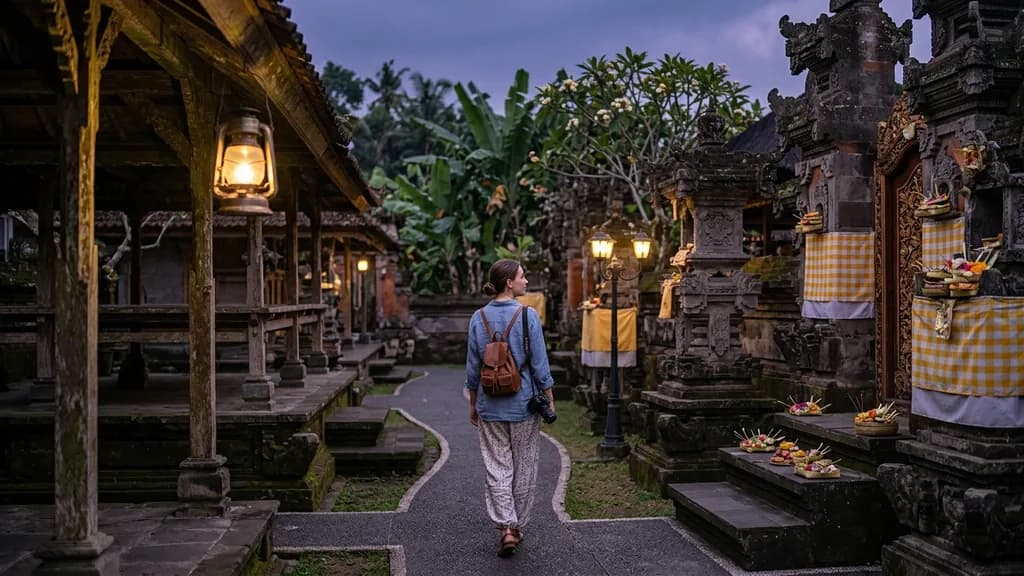
Is Morocco Safe for Solo Female Travelers in 2026? Honest Guide
Morocco is one of the most rewarding destinations a solo female traveler can choose, and it is also one of the most misunderstood. You will read horror stories on travel forums and sanitized "everything is perfect" posts from influencers, and the truth sits squarely between them. This is the honest 2026 guide our editorial team put together after years of female-led travel through Marrakech, Fes, Chefchaouen, Essaouira, and the Sahara.
No fearmongering. No sugar-coating. Just what you actually need to know before you go.
TL;DR - Is Morocco Safe for Solo Female Travelers?
Yes, Morocco is safe for solo female travelers in 2026, but harassment is real and you should plan for it. Serious violent crime against tourists is rare. Verbal harassment - catcalling, persistent men offering "directions" or "tours," pushy shopkeepers - is common, especially in the Marrakech and Fes medinas. Between 60 and 80 percent of solo female travelers report some form of harassment during a one-to-two week trip, but over 95 percent of incidents are verbal rather than physical.
With modest dress, confident body language, and basic street smarts, most solo female travelers describe Morocco as challenging in the first 24 hours and then genuinely wonderful. For a broader overview that covers non-gender-specific risks, see our Morocco Safety Guide.
What Official Travel Advisories Say About Morocco
All three major English-language government advisories currently rank Morocco as generally safe with normal precautions:
| Country | Current Level | Key Concern for Women |
|---|---|---|
| United States (State Dept) | Level 2 - Exercise Increased Caution | Terrorism risk, demonstrations, petty crime |
| United Kingdom (FCDO) | No general "avoid travel" advisory | Harassment of female travelers, scams, road safety |
| Australia (Smartraveller) | Exercise a High Degree of Caution | Sexual harassment, petty crime, protests |
The US Department of State specifically notes that sexual harassment of women occurs in Morocco, "particularly in tourist areas." The UK FCDO goes further, advising women travelers to "be aware that harassment by men can occur." These are not warnings to stay home. They are warnings to go prepared.
None of the advisories suggest canceling travel, and all three explicitly acknowledge Morocco's stable political situation and strong tourism infrastructure.
The Reality of Harassment in Morocco
This is the part most guides skip, and it is the part you actually need. Here is what to expect on the ground.
What harassment usually looks like
The overwhelming majority of what solo female travelers experience in Morocco is verbal and opportunistic, not predatory:
- Catcalling: "Hello gazelle," "welcome sister," "Fatima" (a catch-all name), whistles, kissing sounds
- Persistent sales pitches: shopkeepers and restaurant touts who will not take no for an answer
- Fake guides: men (often young) who insist on showing you the way and then demand payment
- Staring: in more conservative areas like rural villages or Fes medina's deeper sections
- Comments on marital status: "Where is your husband?" is asked constantly
About 95 percent of harassment reports from Morocco fall into these verbal categories. Physical harassment - groping in a crowded souk, an unwanted arm around the shoulder - is less common but does happen, particularly in the densest parts of Marrakech and Fes medinas at peak hours.
Why it happens
Morocco is a Muslim-majority, culturally conservative country where local women rarely travel alone or sit in cafes unaccompanied. A solo Western woman is therefore visually unusual, and some men interpret her presence as an invitation for conversation or more. This does not make it acceptable - the Moroccan government runs public campaigns against harassment - but understanding the context helps you read situations accurately.
The 2018 murder of two Scandinavian hikers near Chefchaouen shocked the country and remains the benchmark serious incident that locals still reference. It was an aberration, not a pattern, and triggered significantly increased police presence on rural hiking trails, where solo female hikers should still only go in groups or with guides.
Dress Code Decoded for Female Travelers
You will read contradictory advice online. Here is the practical version.
What to actually pack
| Garment | Verdict for Morocco |
|---|---|
| Maxi dresses (loose) | Ideal - comfortable and culturally appropriate |
| Linen pants or wide-leg trousers | Ideal |
| T-shirts with sleeves | Fine in all tourist areas |
| Tank tops / spaghetti straps | Avoid outside of resort pools |
| Shorts above the knee | Avoid in cities; acceptable at beach resorts |
| Leggings alone | Wear under a long tunic, not solo |
| Headscarf | Optional; useful for mosques and rural areas |
| Loose cardigan or shawl | Essential - doubles as a modesty layer |
The rule of thumb is shoulders and knees covered, and loose rather than tight. You do not need to cover your hair in Marrakech, Casablanca, Rabat, Essaouira, Tangier, or tourist Chefchaouen. You may want to in Fes medina, Moulay Idriss, or rural villages simply to attract less attention.
The harem pants trap
You will see stalls all over Marrakech selling colorful harem pants marketed as "Moroccan style." Actual Moroccan women do not wear them. They instantly mark you as a tourist and often attract more harassment, not less. Skip them. Pack neutral linen pants instead.
City-by-City Safety for Solo Female Travelers
Not all Moroccan cities carry the same risk profile. Here is how our team ranks them for solo women.
| City | Solo Female Rating | Main Risk | Notes |
|---|---|---|---|
| Casablanca | Very Safe | Minor street harassment | Most cosmopolitan, many working women, few tourists in daily life |
| Rabat | Very Safe | Minimal | Diplomatic capital, low harassment, underrated stay |
| Essaouira | Very Safe | Minor catcalling | Atlantic breeze, relaxed vibe, easy medina |
| Chefchaouen | Safe | Rural isolation on trails | Blue city is calm; do not hike solo |
| Tangier | Mostly Safe | Port-city hustlers | Stay in the new medina or Kasbah area |
| Marrakech | Moderate | Medina harassment, scams | Highest volume of hassle; still manageable |
| Fes | Moderate | Medina at night, persistent guides | Deeper medina less tourist-smoothed than Marrakech |
| Merzouga / Sahara | Depends on Tour | Isolated camps, solo drivers | Only travel in groups of 6+ with reputable operator |
Our recommendation for first-time solo female travelers: start in Casablanca or Rabat for a gentle landing, then add Essaouira for beach downtime, Chefchaouen for atmosphere, and Marrakech at the end when you have built your confidence. Our Marrakech complete guide covers the medina and souks in detail.
Solo Female in Moroccan Medinas
The medina is where the best and hardest parts of Morocco happen. Here are the patterns that will make or break your day.
The persistent "directions" scam
A man (often a teenager) sees you looking at a map or hesitating. He says "the square is this way, follow me" and walks ahead. A few minutes later you arrive and he demands 50 to 200 MAD (roughly $5 to $20 USD). Some get aggressive if refused.
How to handle it: Pre-download offline maps (Maps.me works offline and includes most medina alleys). If someone starts leading you, say "la shukran" firmly and stop walking. If they continue, duck into the nearest shop.
The "this street is closed" trick
You walk toward your riad and a man says "closed, closed - tannery this way." He is trying to reroute you through his cousin's rug shop. Streets in Moroccan medinas are almost never actually closed to pedestrians. Keep walking.
The henna ambush
In Jemaa el-Fnaa and similar tourist squares, a woman will grab your hand and start applying henna before you can pull away. She then demands 200 to 500 MAD ($20 to $50 USD). Keep your hands close to your body in busy squares, and do not make eye contact with henna women unless you actually want henna.
Being followed
Occasionally a man will simply follow you for several blocks. Do not lead him to your riad. Walk into a cafe, order a mint tea, wait 15 minutes, and leave in a different direction. If he is still there, ask the cafe staff for help - Moroccan cafe owners generally take female tourist safety seriously.
Night Safety in Morocco for Women
Morocco after dark is a different country. Planning saves you stress.
- Jemaa el-Fnaa, Marrakech: lively and generally safe until about 11pm. The main square is fine; the dark alleys bleeding off it are not.
- Fes medina: sketchy after dark. Even locals avoid the deeper lanes at night. Take a petit taxi to the medina gate, walk directly to your riad, and do not wander.
- Chefchaouen: one of the calmer cities after dark. Still, stick to the main plaza.
- Essaouira: the seafront stays lively and feels European. One of the easier evenings.
- Casablanca and Rabat: modern nightlife districts (Maarif, Agdal) feel like any European capital.
Always know the name and a landmark near your riad so you can tell a taxi driver. Petit taxis (red in Casablanca, beige in Marrakech, blue in Rabat) are cheap and the safest way home after dinner.
The Hammam Experience for Solo Women
Do not skip this. A traditional hammam is often the single best experience solo female travelers describe from their Morocco trip.
Key rules:
- Ask about women-only hours at your riad. Most public hammams split days or times between men and women.
- Tourist hammams (like Hammam de la Rose in Marrakech) are co-ed friendly and fully clothed in staff interactions; good for a first time.
- Public neighborhood hammams are women-only during female hours and are incredible cultural experiences for around 50 MAD ($5 USD) plus 100 MAD ($10 USD) for a scrub.
- What to bring: your own underwear (worn during the scrub), flip-flops, a towel. Many neighborhood hammams sell the rest.
It is intimate, communal, and one of the few spaces in Morocco where you will be surrounded by Moroccan women rather than men.
Sahara Desert Tours for Solo Female Travelers
The desert trip is a Morocco highlight, but this is where operator choice matters most.
- Book a reputable operator with a group of at least six travelers. Platforms like GetYourGuide, Viator, and Intrepid Travel filter for reviewed companies.
- Avoid signing up with a random driver you meet near Jemaa el-Fnaa offering a "private" desert tour.
- Check recent reviews for mentions of how the driver treats female passengers.
- Prefer Merzouga over Zagora for solo women - Merzouga has more established camps with female staff.
- Ask about gender ratio in your vehicle before booking if possible.
At the camp itself, keep your tent zipped and your valuables in your daypack inside your sleeping bag. Reports of theft are rare; reports of inappropriate advances from staff are not unheard of but are massively reduced at reputable camps.
Transport Safety for Solo Women in Morocco
| Mode | Solo Female Rating | Tips |
|---|---|---|
| Airport taxi (pre-paid) | Safe | Use fixed-price counters at CMN, RAK, FEZ |
| Petit taxi in city | Safe | Insist on the meter, or fix a price before entering |
| Grand taxi (shared) | Caution | Six people in a sedan; ask for the front passenger seat or pass |
| CTM / Supratours bus | Very Safe | Assigned seats, online booking, reliable long-distance |
| ONCF train | Very Safe | Book 1st class - almost always 6-person compartments, quieter |
| Rental car | Safe | Good if you're confident; Moroccan drivers are aggressive |
| Careem / inDrive | Safe | App-based, receipt trail, available in major cities |
For long-distance travel, first class ONCF trains or CTM buses beat grand taxis every time as a solo woman. The price difference is small and the comfort difference is enormous. Read more in our Morocco travel guide.
What to Do If You're Harassed
Most harassment is verbal and dies on its own if you do not engage. A few tactics that work:
- Do not make eye contact. Eye contact signals interest or willingness to engage.
- Say "la shukran" ("no thank you" in Arabic) firmly once. Repeat only if necessary.
- Do not smile or laugh nervously. This is read as flirtation.
- Keep walking. Stopping invites escalation.
- Move toward a crowd, shop, or cafe if someone follows.
- Call out the behavior publicly in Moroccan culture if it escalates. Loud "what are you doing?" draws bystander attention and most Moroccan men will back down.
Emergency Contacts
| Service | Number | When to Use |
|---|---|---|
| Tourist Police | 19 | Scams, non-emergency harassment, lost items |
| Police (general) | 19 | Any police need |
| Ambulance | 15 | Medical emergency |
| Fire | 15 | Fire or rescue |
| EU-wide Emergency | 112 | Works in Morocco too; routes to local services |
| Your Embassy | Varies | Serious incident, lost passport |
Program these into your phone before you land. Also save your riad's phone number and full address, and screenshot both so they are accessible offline.
Group Tours vs Solo: Which Is Right for You?
This is the honest comparison:
- Pure solo travel: maximum freedom and the deepest cultural immersion, but the highest harassment exposure. Best if you have solo traveled in other challenging destinations before.
- Group tours (Intrepid, G Adventures, local operators): roughly half the harassment rate, built-in community, pre-vetted hotels and transport, higher cost. Best for first-time visitors to North Africa.
- Hybrid: fly in solo, do 2-3 days of a reputable tour (for example a 3-day Sahara tour from Marrakech), then solo travel the calmer cities like Essaouira and Chefchaouen. This is what our editors recommend most often.
Whatever you pick, travel insurance is non-negotiable for Morocco. Medical evacuation from the Atlas or Sahara is expensive without it. See our travel insurance guide for current options.
Final Honest Take
Morocco is not the easiest country for a solo female traveler, but it is also not the hardest - it sits somewhere between Southeast Asia (easier) and parts of India (harder) in terms of daily effort. What makes Morocco worth it is that once you adjust to the rhythm, the country opens up: rooftop mint tea at sunset in Chefchaouen, a Marrakech riad courtyard to yourself, the silence of the Sahara at dawn, and Moroccan women who treat you with real warmth once you meet them on their terms.
Go prepared. Dress smart. Walk with confidence. Book reputable tours for the desert. Use your "la shukran" early and often. The first 24 hours in Marrakech will test you; by day three you will be negotiating taxi fares and dodging fake guides like a local. And then you will never want to leave.
For more pre-trip reading, see our companion Morocco Safety Tips and our Marrakech first-timer guide.
Safe travels.
Sources & References
This article is based on first-hand experience and verified with the following official sources:

Go2Morocco Editorial Team
Exploring Morocco since 2023 | All 12 regions covered | Updated monthly
We are a team of travel writers and Morocco enthusiasts who explore the country year-round. Our guides are based on first-hand experience, local knowledge, and verified official sources.
More about us →Tags
People Also Read
Marrakech Complete Guide: Medina, Souks & Where to Stay
Complete Marrakech travel guide: explore the medina, navigate souks, find the best neighborhoods, and discover where to stay. Includes 1-day and 3-day itineraries.
Is Morocco Expensive in 2026? A Real Cost Breakdown
Real 2026 Morocco costs - daily budgets $30-200, hotel/meal/transport prices with USD equivalents, and the math on why Morocco is Europe's cheapest exotic neighbor.
Marrakech vs Fes for Tourists: Honest 2026 Comparison
Marrakech or Fes for your first Morocco trip? Honest 10-dimension comparison - cost, medina depth, food, safety, day trips, and when to pick each.
Morocco vs Egypt for Tourists: Honest 2026 Comparison
Morocco or Egypt for your 2026 North Africa trip? Honest 10-dimension comparison, pyramids vs souks, cost, safety, food, and which fits your travel style.
Plan Your Morocco Trip
Book hotels, transport, activities, and get connected with an eSIM
Some links are affiliate links. We may earn a commission at no extra cost to you.