Day Trips from Marrakech: Ourika Valley, Essaouira & Ouzoud Falls
Marrakech is an intoxicating city—the medina's chaos, the call to prayer echoing across the Jemaa el-Fnaa, the scent of spices and leather. But after a few days, you'll want to escape the heat and crowds. The good news: some of Morocco's most stunning day trips from Marrakech are within arm's reach. Whether you're trekking to mountain waterfalls, swimming in Berber villages, or watching the Atlantic sunset over a fishing port, these three destinations deliver genuine magic without the 3am wake-up calls of multi-day tours.
This article may contain affiliate links — we earn a small commission at no extra cost to you.
Key Takeaways
| Question | Answer |
|---|---|
| What is the best time to visit? | April–May and September–October offer perfect weather; avoid July–August heat and November–March rains |
| How much does it cost? | Budget 300–600 MAD ($30–60 USD) per person for guided tours; transport adds 50–150 MAD |
| How do I get there? | Organized tours (easiest), rental car (most flexible), or grand taxis (most authentic) |
| Is it safe? | Very safe; all three destinations are well-traveled and secure for solo travelers and families |
| What should I [book in advance? | Tours during peak season (April–May); transport](https://12go.tpo.lv/tNA80urD) less critical unless traveling solo |
| How long should I stay? | 8–10 hours for Ourika Valley or Essaouira; 10–12 hours for Ouzoud Falls |
| What's the real highlight? | Ourika for culture & hiking, Essaouira for coastal beauty, Ouzoud for dramatic waterfalls |
1. Ourika Valley: Berber Villages & Mountain Trekking
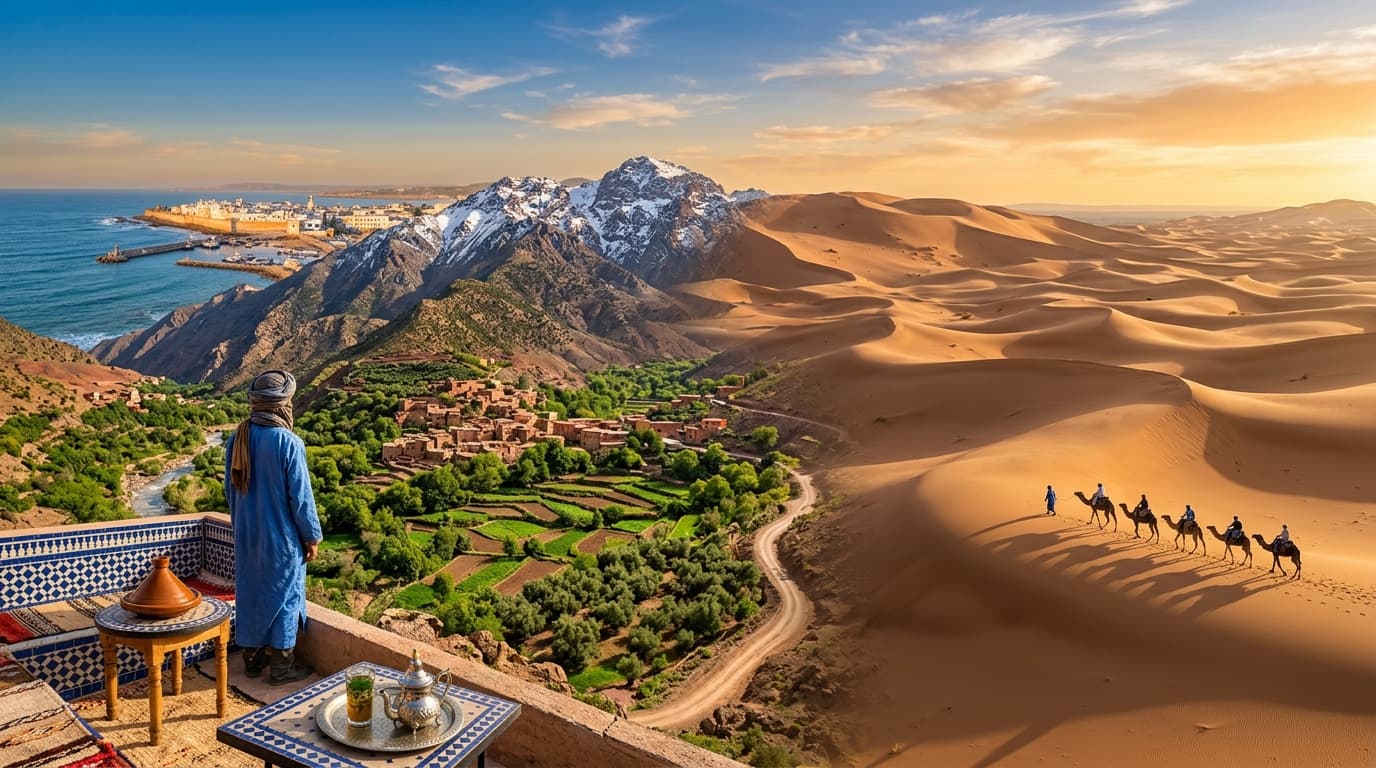
The Ourika Valley sits just 60 kilometers south of Marrakech, nestled in the foothills of the High Atlas Mountains. When we explored the valley last spring, we were struck by how quickly the landscape transforms—within an hour, you've traded the medina's dust for terraced walnut groves, rushing streams, and Berber villages that seem untouched by time. The valley is the closest mountain escape to Marrakech and perfect if you want hiking, culture, and a genuine taste of rural Morocco without committing to an overnight trek.
The valley's appeal lies in its accessibility and authenticity. You're not hiking Toubkal or camping in the Sahara—you're experiencing Atlas Mountains region guide culture at a manageable pace. Most visitors base themselves in the lower villages like Setti Fatma or Ourika town, where you'll find guesthouses, restaurants, and guides who can arrange everything from short nature walks to full-day treks.
Hiking & Waterfall Trails
The valley's main draw is the Setti Fatma waterfall hike, a popular 2–3 hour trek that takes you past five cascading waterfalls. The trail is well-marked and suitable for most fitness levels, though the final waterfall requires some scrambling over rocks. During our visit, we hiked in early morning to beat the tour groups—by 10am, the lower falls were crowded with day-trippers. The water is cold but refreshing, and locals swim in the pools between falls.
Practical details for the hike:
- Starting point: Setti Fatma village (60km from Marrakech)
- Duration: 2–3 hours round trip
- Difficulty: Easy to moderate
- Cost: Typically included in guided tours (300–400 MAD / $30–40 USD) or free if you hike independently
- Best time: Early morning (7–8am) to avoid crowds and heat
- What to bring: Water, sun protection, sturdy shoes, swimwear
If you prefer a gentler walk, the valley floor offers numerous short nature trails through olive and walnut groves, often passing through Berber hamlets where you can stop for tea and conversation.
Berber Village Experiences & Homestays
Beyond hiking, the real magic of Ourika is meeting the people. Many tour operators offer homestay lunches in Berber families' homes—you'll sit on cushions, eat tagine food guide prepared by the family's matriarch, and hear stories about life in the mountains. These aren't tourist theater; they're genuine interactions, though you should be aware that some homestays are more commercial than others.
During our last visit, we stayed with a family in a small village above Setti Fatma. The mother taught us how to make msemen food guide (Moroccan flatbread), and her teenage son explained how the valley's water system works. The meal cost 80 MAD ($8 USD) and included three courses plus mint tea. It's worth seeking out these experiences—they're far more memorable than any restaurant meal.
2. Essaouira: Coastal Escape & Fresh Seafood
If mountains don't appeal, Essaouira is Morocco's answer to a beach day—a 170-kilometer drive west from Marrakech that takes you from desert heat to Atlantic breezes in under three hours. The coastal town has become increasingly popular with tourists, but it retains a laid-back, bohemian vibe that Marrakech lost years ago. The medina is smaller and less overwhelming, the beaches are genuinely beautiful, and the seafood is some of the best you'll eat in Morocco.
Essaouira sits on a peninsula, so you get dramatic coastal views, a working fishing harbor, and reliable wind—it's become a kitesurfing hub, though that's not relevant if you're just visiting for the day. What matters is that the town feels refreshingly different from inland Morocco: less intense, more European in pace, with a thriving arts scene and a history of cultural tolerance that still shows in its architecture and atmosphere.
Beach Time & Harbor Walks
The main beach stretches for kilometers, backed by ramparts and a promenade. It's not a Caribbean postcard—the water is cold (Atlantic, not Mediterranean), and the beach is often windy—but it's dramatic and genuine. We spent an afternoon walking the shoreline, watching fishermen bring in their catch, and sitting at a beachfront café with fresh orange juice and Moroccan mint tea.
The harbor itself is the real attraction. Fishing boats in bright colors line the docks, and you can watch the daily catch being unloaded and sold at auction. The smell is pungent (in a good way), and the energy is infectious. Walk through the fish market early morning if you can—it's chaotic, authentic, and free.
What to do at the beach:
- Swimming: Possible but cold; bring a wetsuit or accept the shock
- Sunbathing: Yes, though wind can be strong
- Photography: Endless opportunities, especially at sunset
- Kitesurfing: Available through local operators if you're experienced
- Relaxation: Sit at a beachfront café and watch the Atlantic for hours
Medina & Seafood Dining
Essaouira's medina is a maze of narrow streets, but it's less intimidating than Marrakech's. You'll find art galleries, craft shops, and plenty of cafés. The town has a creative community—painters, musicians, and writers—and it shows in the vibe. We ducked into several galleries and found genuinely interesting work, not just tourist trinkets.
The real reason to visit, though, is the seafood. Essaouira is a major fishing port, and the restaurants along the harbor serve fish so fresh it was swimming that morning. You can point at your choice in the market, and a nearby restaurant will cook it for you—grilled whole, with lemon and olive oil—for 100–150 MAD ($10–15 USD). We had a massive grilled sea bream, salad, and bread for two people for less than 200 MAD. Pair it with a cold Casablanca beer and you've got a perfect lunch.
Best seafood spots:
- Harbor restaurants: Dozens of small places along the waterfront; all serve fresh fish at similar prices
- Timing: Lunch is better than dinner (fresher fish, better prices, more atmosphere)
- Pro tip: Walk the harbor, see what's been caught, and ask locals which restaurant to choose
3. Ouzoud Falls: Morocco's Most Dramatic Waterfall
If you want a single stunning visual to take home from your day trip, Ouzoud Falls delivers. Located 150 kilometers northeast of Marrakech, near the town of Azilal, the falls plunge 110 meters into a canyon in a series of cascades that are genuinely breathtaking. The journey is longer than Ourika or Essaouira—expect 10–12 hours door-to-door—but the payoff is worth it if you love dramatic landscapes and don't mind a full day of travel.
The falls are Morocco's highest, and they're fed year-round by the Abid River, so unlike some seasonal waterfalls, they're impressive even in dry months. When we visited in May, the water was thundering down, creating a mist visible from the parking area. The setting is cinematic: red canyon walls, olive groves, and a small village perched on the clifftop overlooking the falls.
The Falls & Canyon Hike
Most visitors hike down into the canyon to get closer to the falls—it's a steep but manageable descent of about 30 minutes. The trail is rocky and can be slippery if wet, but it's well-trodden. At the bottom, you can swim in the pools beneath the falls (the water is cold but refreshing) and explore the canyon floor. The views from below are spectacular; the roar of the water is immense.
Details for the canyon hike:
- Starting point: Parking area at the top of the falls
- Duration: 1–2 hours round trip (including time at the bottom)
- Difficulty: Moderate; steep descent and ascent, rocky terrain
- Swimming: Yes, in pools at the base; bring swimwear
- Cost: Free to hike; guides available for 100–150 MAD ($10–15 USD) if you want narration
- Best time: Early morning to avoid crowds and heat
The hike down is the main event, but the clifftop village above the falls is worth exploring too. You'll find small cafés, guesthouses, and locals selling handicrafts. It's touristy but not aggressively so—more authentic than Marrakech's medina, less touristy than Essaouira.
Olive Oil Mills & Local Culture
Near Ouzoud, you'll find traditional olive oil mills (called "moulin" locally) where Berber families press olives using centuries-old methods. Some are still powered by water wheels from the river. A few have opened to tourists, offering demonstrations and tastings. It's a genuine glimpse into rural Moroccan agriculture, though be aware that some mills are more set up for tourism than others.
During our visit, we stopped at a family-run mill where the owner showed us the entire process—from sorting olives to pressing to bottling. He gave us a taste of his oil (peppery, fresh, delicious) and offered bottles for 60 MAD ($6 USD)—a fair price for quality oil. These interactions are the real value of visiting Ouzoud; the falls are stunning, but the people and culture are what make it memorable.
Did You Know? Ouzoud Falls attract over 200,000 visitors annually, making it one of Morocco's most visited natural attractions. The falls are also home to a troop of Barbary macaques—the only wild primates in Africa outside sub-Saharan Africa.
Source: Visit Morocco Official
4. Tour Operators & Booking Options
You have three main ways to visit these destinations: organized tours, rental car, or grand taxis. Each has trade-offs in cost, flexibility, and comfort.
Organized Tours: Convenience vs. Authenticity
Organized day tours are the easiest option—a driver picks you up from your hotel, handles navigation, and often includes a guide. Prices range from 300–600 MAD ($30–60 USD) per person depending on the destination and what's included. Most tours include hotel pickup, transport, a guide, and lunch; some add activities like cooking classes or camel rides.
Pros:
- No planning required: Everything is arranged
- Social: You'll meet other travelers
- Guided insights: A good guide adds context and stories
- Fixed price: No surprises or negotiation
Cons:
- Inflexible timing: You're locked into the tour schedule
- Group pace: You move at the slowest person's speed
- Tourist bubble: You're with other tourists, not locals
- Quality varies wildly: Some guides are excellent; others are indifferent
In our experience, tour quality depends heavily on the operator and guide. We've had phenomenal guides who shared deep knowledge of Berber culture and terrible ones who just pointed at things. Ask your riad or hotel for recommendations—they know which operators are reliable. Avoid booking through random websites; use established local operators or ask your accommodation to arrange it directly.
Rental Car: Maximum Flexibility
Renting a car gives you complete control over timing and route. A basic car costs 250–400 MAD ($25–40 USD) per day; add fuel and you're looking at 400–500 MAD ($40–50 USD) total. This works out cheaper per person if you're traveling with others, and you can explore at your own pace.
Pros:
- Flexibility: Stop whenever you want, stay as long as you want
- Cheaper for groups: Split the rental cost among 3–4 people
- Authentic exploration: You can find small villages and restaurants tourists miss
- No time pressure: No need to rush back to the tour bus
Cons:
- Navigation: You need GPS or a good map; some roads are poorly marked
- Driving culture: Moroccan roads can be chaotic; driving standards vary
- Parking: Finding safe parking in towns can be stressful
- Solo travel: Expensive if you're traveling alone
We've rented cars in Morocco multiple times, and it's doable if you're a confident driver. The main roads (N1 to Essaouira, N8 to Ouzoud) are well-maintained. Secondary roads are rougher but passable. The biggest challenge is other drivers—expect aggressive honking, sudden lane changes, and a general disregard for traffic rules. If you're comfortable with that, a rental car is the best way to explore at your own pace.
Grand Taxis: The Local Option
Grand taxis are shared minibuses that run fixed routes between cities. They're the cheapest option (50–100 MAD / $5–10 USD per person) and the most authentically Moroccan. You'll sit with locals, hear Moroccan music, and get a genuine sense of how people move around the country.
Pros:
- Cheapest option: 50–100 MAD per person
- Authentic: You're traveling with locals, not tourists
- Flexible: Taxis leave frequently; no need to book in advance
- Social: You'll meet Moroccan people and hear their stories
Cons:
- No English: Drivers and passengers speak French or Arabic
- Uncomfortable: Taxis are cramped; you might sit 6 in a row
- Unpredictable: Departure times are flexible (i.e., they leave when full, not on schedule)
- No guide: You're on your own once you arrive
Grand taxis run from the main transport hub in Marrakech (near the medina). For Essaouira, taxis leave from the western side of the city; for Ouzoud, from the southern hub. If you speak French or have a Moroccan friend, this is the most authentic way to travel. If you don't, it can be confusing—you might end up on the wrong taxi or in the wrong town.
| Option | Best For | Cost (per person) | Pros | Cons |
|---|---|---|---|---|
| Organized Tour | Convenience, first-timers | 300–600 MAD | All-inclusive, no planning, guided | Inflexible, touristy, quality varies |
| Rental Car | Groups, flexibility, exploration | 400–500 MAD (split) | Complete control, authentic | Requires confident driving, navigation stress |
| Grand Taxi | Budget travelers, authentic experience | 50–100 MAD | Cheapest, local experience, frequent | Cramped, no English, unpredictable timing |
5. Best Time to Visit & Weather Considerations
The timing of your day trip matters more than you'd think. Marrakech's climate is extreme—scorching in summer, cold in winter, and unpredictable in spring. The Atlas Mountains region guide has its own microclimate, and Essaouira's weather is entirely different from Marrakech's.
April–May is the sweet spot. Temperatures are warm but not oppressive (25–30°C / 77–86°F), wildflowers bloom in the valleys, and the mountains are accessible without snow. We visited Ouzoud in late April and had perfect conditions—clear skies, flowing water, and comfortable hiking weather.
September–October is the second-best window. Summer heat has broken, the valleys are still green from spring rains, and tourist crowds are thinner than in April–May. The only downside is that some water sources (like smaller waterfalls) may be lower.
Avoid July–August. Temperatures in Marrakech regularly exceed 40°C (104°F), and the heat makes hiking miserable. The Ourika Valley is crowded with European tourists escaping their own summer heat. Essaouira is pleasant (cooled by Atlantic breezes) but packed.
Avoid November–March. Winter rains can make mountain roads slippery and trails muddy. The Atlas Mountains can see snow, which blocks higher passes. That said, if you're visiting Essaouira, winter is fine—the coast is mild and less crowded.
Did You Know? The Ourika Valley receives more rainfall than Marrakech due to its elevation and proximity to the mountains. Annual rainfall in the valley averages 600mm, compared to just 250mm in Marrakech city.
Source: Lonely Planet Morocco
6. What to Pack & Practical Preparation
Packing for a day trip from Marrakech is straightforward, but a few items make a huge difference in comfort and safety.
Essential items:
- Water: Bring 1–2 liters per person; you'll sweat more than you expect, especially on hikes
- Sun protection: High SPF sunscreen, hat, sunglasses—the sun is intense at altitude
- Sturdy shoes: Hiking boots or trail shoes with good grip; flip-flops won't cut it on rocky terrain
- Swimwear: If you're visiting Ourika or Ouzoud, bring swimwear for the pools
- Layers: Even in summer, mountains cool down significantly; bring a light jacket
- Cash: ATMs are limited in rural areas; bring enough MAD for meals, guides, and tips
Optional but helpful:
- Portable charger: For phone navigation and photos
- Snacks: Energy bars, nuts, dried fruit—local food is good but not always available
- Insect repellent: Mosquitoes are rare in mountains but present in coastal areas
- Plastic bags: For wet clothes or trash (leave no trace)
When we visited Ouzoud, we underestimated how much water we'd need and ended up dehydrated by mid-afternoon. Now we bring 2 liters per person and refill whenever possible. Similarly, we learned to wear hiking boots after slipping on wet rocks—sandals look fine but are genuinely dangerous on steep terrain.
7. Food, Drink & Local Cuisine
One of the best parts of day trips is eating local food. Each destination has its own specialties, and eating where locals eat is both cheaper and more authentic than tourist restaurants.
In Ourika Valley: The signature meal is tagine cooked in a family home. Tagine food guide is Morocco's national dish—slow-cooked meat or vegetables with dried fruits, spices, and sometimes nuts. In the valley, you'll eat it with khobz food guide (Moroccan bread) and Moroccan mint tea. A homestay meal costs 80–120 MAD ($8–12 USD) and is far better value than any restaurant.
In Essaouira: Fresh seafood is the obvious choice. Grilled fish, harira food guide (chickpea soup), and fresh salads dominate the menus. Lunch for two people at a harbor restaurant runs 150–250 MAD ($15–25 USD). Avoid restaurants on the main promenade; walk into the medina or along the harbor and you'll find better prices and fresher food.
In Ouzoud: The village above the falls has basic cafés serving couscous food guide and simple tagines. Food here is functional rather than exceptional—it's more about refueling than culinary experience. Bring snacks if you're picky.
Drinks across all destinations: Moroccan mint tea is free or nearly free everywhere—it's offered as hospitality. Fresh orange juice is ubiquitous and delicious (15–20 MAD / $1.50–2 USD). In Essaouira, cold beer is available. Avoid tap water; stick to bottled water or drinks made with boiled water.
8. Safety, Scams & Honest Warnings
Let's be direct: all three destinations are safe for tourists. Violent crime is extremely rare, and the main risks are petty theft and tourist scams—the same as any popular destination.
Real concerns:
- Pickpocketing in crowded areas: Especially in Essaouira's medina and Ourika's main villages. Keep valuables in a money belt or inside pocket.
- Unofficial guides: In Ouzoud and Ourika, you'll be approached by people offering to "guide" you for a tip. Some are legitimate; others are just looking for money. Politely decline or agree on a price upfront.
- Overcharging: Some restaurants in tourist areas charge tourists double. Check prices at multiple places or eat where locals eat.
- Aggressive sales tactics: In Essaouira's medina, shop owners can be pushy. A firm "no thank you" works; don't be rude, just clear.
What's not a real concern:
- Violent crime against tourists
- Kidnapping or robbery on main roads
- Harassment based on gender or nationality (Morocco is generally welcoming)
During our travels, we've never felt unsafe in any of these places. The biggest inconvenience we've faced is being asked for directions by locals (because we apparently look like we know where we're going) and being invited to tea by shop owners hoping we'll buy something. Both are harmless and often lead to interesting conversations.
One genuine tip: If you're a solo female traveler, you might experience catcalls or unwanted attention in Marrakech's medina, but this is far less common in rural areas like Ourika or in Essaouira. Dress modestly (cover shoulders and knees), wear sunglasses, and move with confidence. Most attention is harmless; ignoring it is the best response.
9. Accommodation & Where to Stay Overnight (If You Want)
Most day trips are designed to be done in a single day—you leave Marrakech early morning and return by evening. But if you want to linger, all three destinations have guesthouses and small hotels.
Ourika Valley: Small riads and guesthouses in Setti Fatma and Ourika town cost 200–400 MAD ($20–40 USD) for a basic room. They're simple but clean, and staying overnight lets you hike early morning before crowds arrive. We stayed in a family-run guesthouse in Setti Fatma and woke at 6am to hike the falls alone—it was magical.
Essaouira: The town has dozens of hotels and riads, ranging from budget hostels (100–150 MAD / $10–15 USD) to mid-range riads (300–600 MAD / $30–60 USD) to upscale beachfront hotels. If you're extending your stay, Essaouira is worth a night or two—the sunset over the harbor is stunning, and the seafood dinner is worth the trip alone.
Ouzoud: Basic guesthouses near the falls cost 150–300 MAD ($15–30 USD). They're functional rather than comfortable, but staying overnight lets you see the falls at sunrise and explore the olive mills without rush. Most visitors don't stay overnight here—the falls are the main draw, and once you've seen them, there's not much else to do.
For any of these, book through your Marrakech riad or hotel—they often have relationships with local guesthouses and can arrange better rates. Alternatively, check our Marrakech travel guide for accommodation recommendations in the main city.
10. Practical Booking Guide: Step-by-Step
Here's how to actually book and execute a day trip from Marrakech without stress:
Step 1: Decide which destination(s)
- One day trip: Pick one destination (Ourika or Essaouira are easiest; Ouzoud is longer)
- Two days: Combine Ourika and Essaouira (both are west/south of Marrakech)
- Avoid: Don't try to do all three in one day—you'll spend more time driving than exploring
Step 2: Choose your transport method
- Organized tour: Ask your riad/hotel for recommendations; book 1–2 days in advance
- Rental car: Book online in advance; pick up day-of; return same day
- Grand taxi: Show up at the transport hub in the morning; no booking needed
Step 3: Book accommodation (if staying overnight)
- Ask your Marrakech riad to arrange it, or book directly through booking sites
- Confirm cancellation policy in case of weather
Step 4: Pack the night before
- Water, sun protection, sturdy shoes, swimwear, layers, cash
Step 5: Confirm timing
- If on a tour, confirm pickup time and location the day before
- If renting a car, confirm pickup time
- If taking a grand taxi, arrive at the hub 30 minutes early
Step 6: Go early
- Leave Marrakech by 7–8am to maximize daylight and avoid crowds
- Breakfast before you leave or buy food at a local café
Step 7: Eat where locals eat
- Ask your guide or driver for recommendations
- Avoid restaurants on main tourist strips
- Check prices before ordering
Step 8: Be flexible
- Weather changes; roads have delays; plans shift
- Build in extra time; don't rush to get back to Marrakech
- Some of the best moments happen when you deviate from the plan
Step 9: Tip appropriately
- Guides: 50–100 MAD ($5–10 USD) per person if service was good
- Drivers: 20–50 MAD ($2–5 USD)
- Homestay hosts: Not necessary but appreciated (20–30 MAD / $2–3 USD)
Step 10: Share your experience
- Photos, stories, and honest reviews help other travelers
- Tag your riad or tour operator if they provided good service
Frequently Asked Questions
Can I do multiple day trips in one day?
Technically yes, but it's exhausting. Ourika and Essaouira are in opposite directions from Marrakech, so combining them means 4+ hours of driving. Ouzoud is far from both, so adding it to either destination makes for a 12+ hour day. Better to pick one destination and explore it thoroughly.
What's the best day trip for families with young children?
Ourika Valley is the most family-friendly—the Setti Fatma waterfall hike is manageable for kids 6+, and there are easier walks if needed. Essaouira's beach is great for younger kids. Ouzoud's canyon hike is steep and potentially dangerous for small children.
Do I need a guide?
For Ourika and Ouzoud, a guide adds context and helps you avoid getting lost. For Essaouira, you don't need one—the town is walkable and the harbor is self-explanatory. Guides cost 100–150 MAD ($10–15 USD) and are worth it if you want cultural insights.
What if it rains?
Mountain areas (Ourika, Ouzoud) can get muddy and slippery when wet. Essaouira is fine in rain—it's cooler and less crowded. Check the weather forecast before booking; if heavy rain is predicted, consider rescheduling.
Is it worth staying overnight instead of doing a day trip?
If you have the time, yes. Staying overnight lets you explore at a slower pace, eat dinner, and experience the place beyond the main tourist attractions. But if you're short on time, a day trip captures the highlights.
How much should I budget for a day trip?
Budget 400–800 MAD ($40–80 USD) per person including transport, guide, meals, and activities. Organized tours are all-inclusive (300–600 MAD); rental cars and grand taxis are cheaper but require you to pay for food and guides separately.
Can I visit multiple destinations in one trip?
Yes, if you stay 2–3 days. Day 1: Ourika Valley. Day 2: Essaouira. Day 3: Ouzoud. Or pick two and spend more time in each. Trying all three in 2 days is possible but rushed.
What's the best time to visit each destination?
All three are best in April–May and September–October. Ourika is beautiful year-round but muddy in winter. Essaouira is pleasant even in winter. Ouzoud is best when water levels are high (spring and early summer).
Conclusion
The three best day trips from Marrakech each offer something different: Ourika Valley for mountain culture and hiking, Essaouira for coastal beauty and fresh seafood, and Ouzoud Falls for dramatic natural scenery. None requires more than a day, all are safe and accessible, and each will give you a genuine sense of Morocco beyond the medina.
Our honest take: if you have time for only one, choose based on what calls to you. Love mountains and people? Ourika. Crave beaches and fresh fish? Essaouira. Want a single stunning visual? Ouzoud. If you have 2–3 days, do two or all three—they're different enough that each feels like a separate world.
For more inspiration and practical tips on exploring the region, check out our Atlas Mountains region guide and Atlantic Coast region guide. And if you're planning a longer stay in Marrakech, our Marrakech travel guide covers accommodations, restaurants, and attractions in the city itself.
Book early during peak season (April–May), pack water and sun protection, eat where locals eat, and leave room for spontaneity. Morocco rewards travelers who slow down and pay attention.
Safe travels.
Go2Morocco has explored these destinations extensively and writes from genuine first-hand experience. We're committed to honest, practical advice that helps you make the most of your time in Morocco.
Sources & References
This article is based on first-hand experience and verified with the following official sources:

Go2Morocco Team
Exploring Morocco since 2023 | All 12 regions covered | Updated monthly
We are a team of travel writers and Morocco enthusiasts who explore the country year-round. Our guides are based on first-hand experience, local knowledge, and verified official sources.
More about us →People Also Read
Marrakech Complete Guide: Medina, Souks & Where to Stay
Complete Marrakech travel guide: explore the medina, navigate souks, find the best neighborhoods, and discover where to stay. Includes 1-day and 3-day itineraries.
Marrakech for First-Timers: The Ultimate 2026 Guide
First time in Marrakech? This complete guide covers where to stay, what to see, how to navigate the medina, and essential tips for making the most of Morocco's most exciting city.
Is Morocco Expensive in 2026? A Real Cost Breakdown
Real 2026 Morocco costs - daily budgets $30-200, hotel/meal/transport prices with USD equivalents, and the math on why Morocco is Europe's cheapest exotic neighbor.
Is Morocco Safe for Solo Female Travelers in 2026? Honest Guide
Real 2026 Morocco safety for solo female travelers - catcalling reality, dress expectations, which cities are safer, and the specific scams women should know.
Plan Your Morocco Trip
Book hotels, transport, activities, and get connected with an eSIM
Some links are affiliate links. We may earn a commission at no extra cost to you.